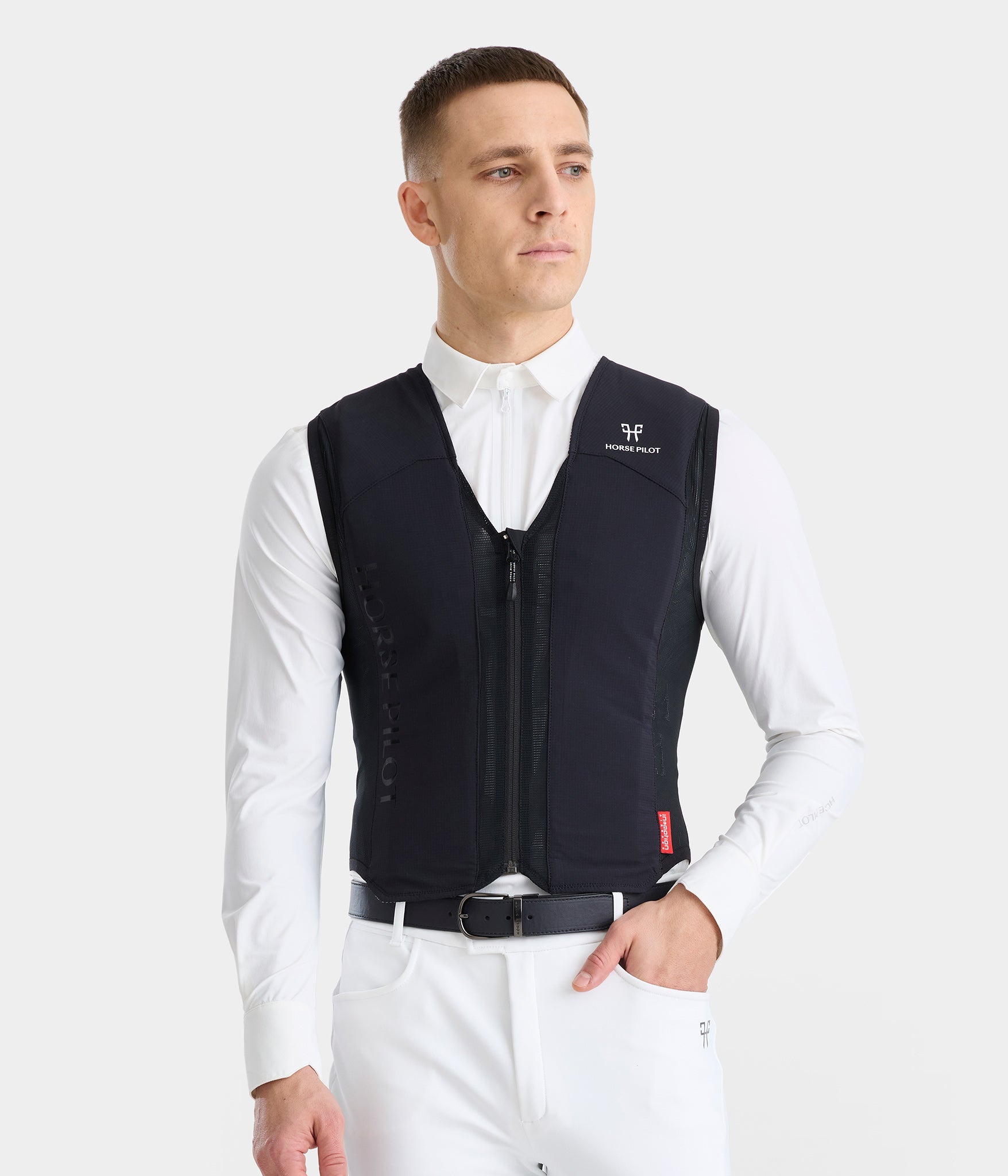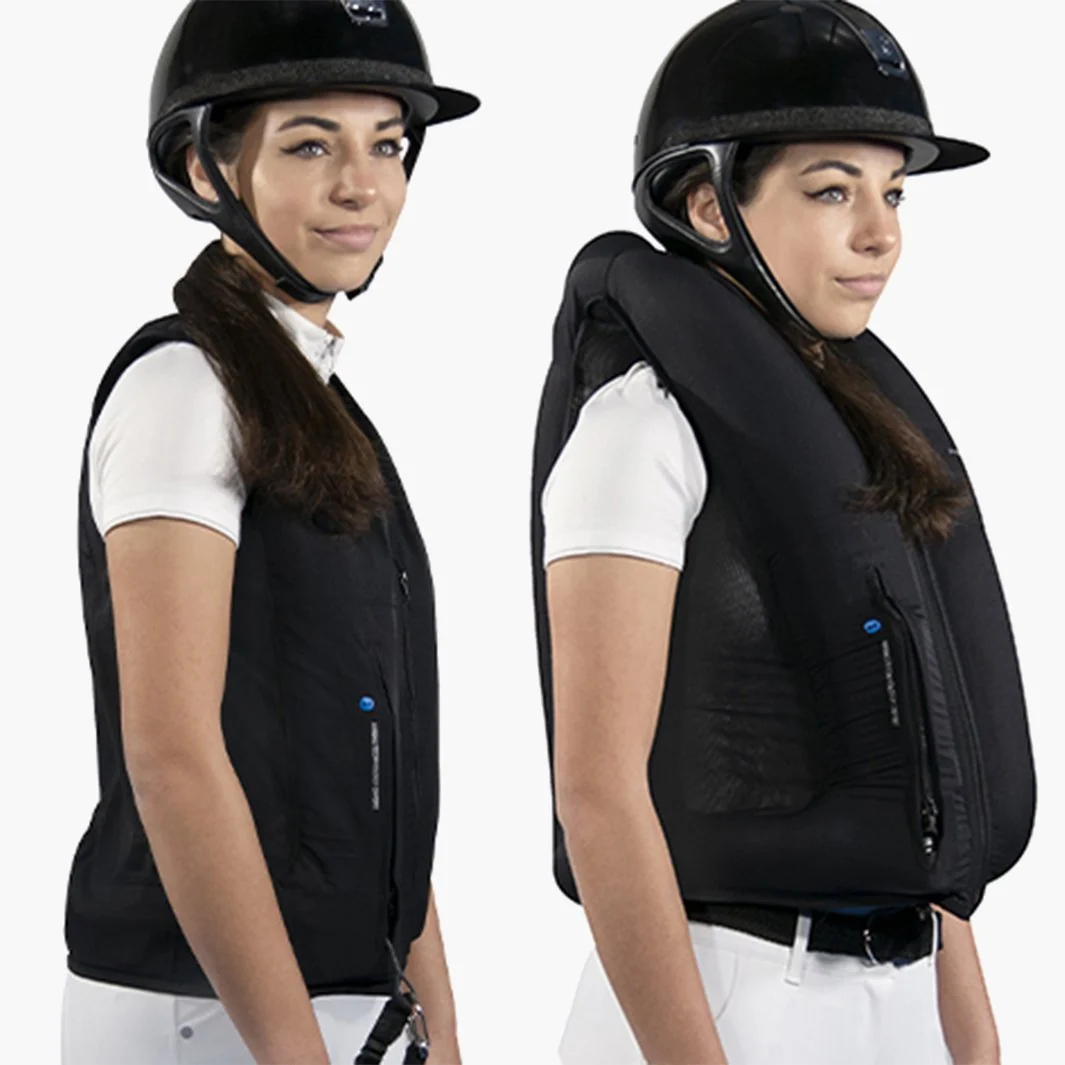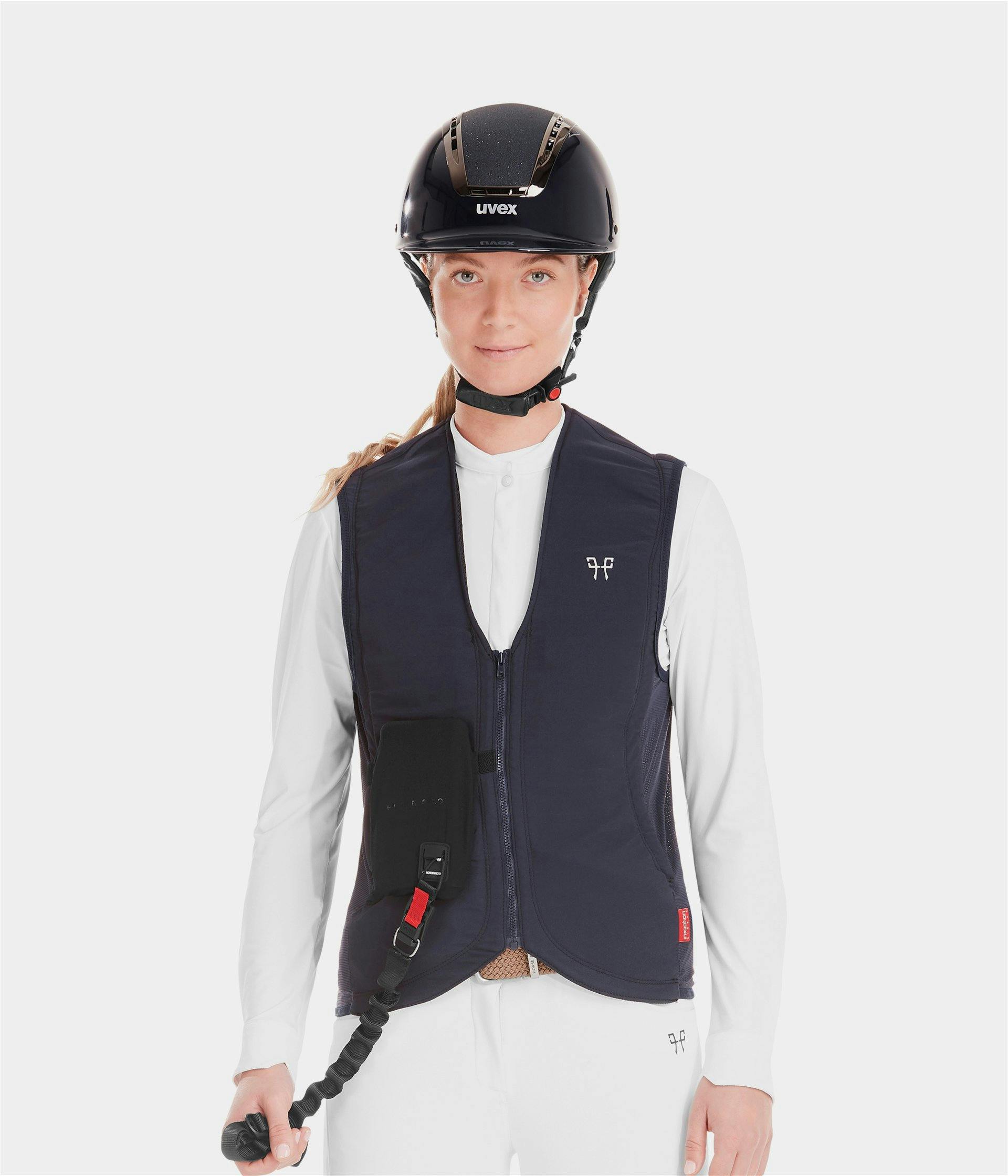
A riding body protector absorbs impacts to the back, ribs and shoulders in a fall. We offer two types: the foam cross-country body protector and the airbag vest, which inflates in a fraction of a second when the rider leaves the saddle.
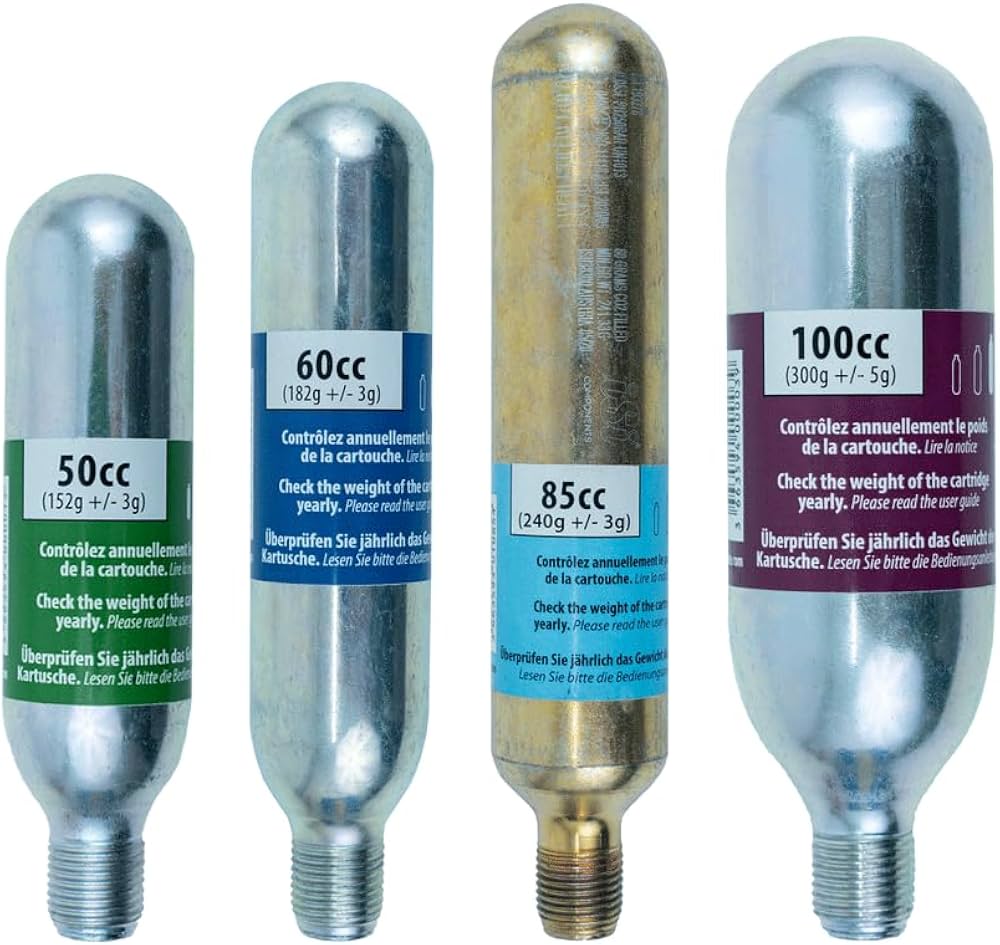
Here you will find Hit-Air, Helite Zip’In 2, Twist’Air and Airbag Rider airbags, including the Kenji competition jacket with a built-in airbag. Replacement cartridges and lanyards are on the same page.
-
 From 490,00 €Select options This product has multiple variants. The options may be chosen on the product page
-
 From 25,00 €Select options This product has multiple variants. The options may be chosen on the product page
-
 From 495,00 €Select options This product has multiple variants. The options may be chosen on the product page
-
 28,00 €
-
 25,00 €
-
30,00 €
-
 From 489,00 €Select options This product has multiple variants. The options may be chosen on the product page
-
-
 From 529,00 €Select options This product has multiple variants. The options may be chosen on the product page
-
 From 229,98 €Select options This product has multiple variants. The options may be chosen on the product page
-
From 119,98 €Select options This product has multiple variants. The options may be chosen on the product page
-
 From 550,00 €Select options This product has multiple variants. The options may be chosen on the product page