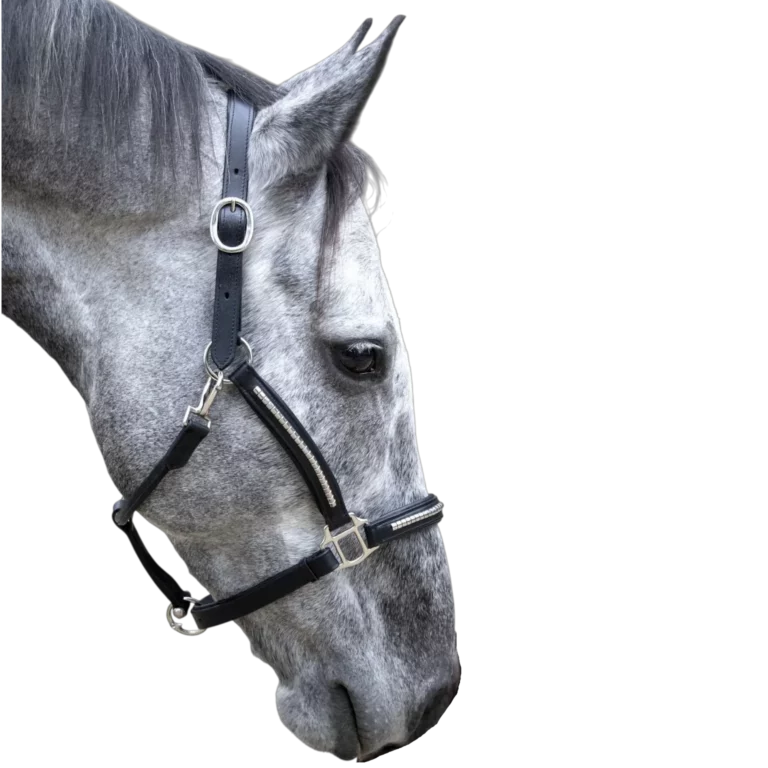


Which rug should you put on your horse depending on the temperature?
Between 5 and 10 °C, a clipped horse living out generally wears 100 to 150 g of fill, whereas an unclipped horse can often go without a rug. The guidelines in this guide are based on BETA, the British association of equestrian equipment manufacturers and retailers, and on the British Horse Society (BHS).
Rug fill weight: what 100, 200 or 300 g mean
The fill weight is the weight of the insulating filling, in grams per square metre, according to the definition from WeatherBeeta. The higher it is, the warmer the rug. At 0 g, it's called a sheet: it keeps off rain and wind without adding warmth.
The terms “medium” and “heavy” vary between sources: a heavyweight starts at 300 g in the Horseware guide, and at 350 g for the British Horse Society. Go by the number of grams, shown on the product page of most of our horse rugs : 100 g for the Innsbruck, 300 g for the HKM Starter.
Horse rugs and temperature: the guideline table
A liner is a lining that attaches to the inside of the rug.
| Temperature | Living out, unclipped | Living out, clipped | Stabled, unclipped | Stabled, clipped |
|---|---|---|---|---|
| 15 °C and above | Nothing | Nothing | Nothing | Nothing or 0 g sheet |
| 10 to 15 °C | Nothing | Nothing, or 0 to 100 g in rain and wind | Nothing or 0 g sheet | 0 to 150 g |
| 5 to 10 °C | Nothing, or 0 to 100 g | 100 to 150 g (+ neck cover) | 100 to 150 g | 150 to 250 g |
| 0 to 4 °C | Nothing, or 150 to 250 g | 200 to 250 g + neck cover | 200 to 250 g | 300 to 400 g |
| -10 to 0 °C | 150 to 300 g (+ neck cover) | 250 to 400 g + neck cover and liner | 200 to 300 g (+ liner) | 300 to 500 g + neck cover |
| Below -10 °C | 300 to 500 g + neck cover | 300 to 500 g + neck cover and liner | 250 to 400 g + neck cover | 300 to 500 g + neck cover and liner |
Sources: Temperature guide to rugging a horse, BETA chart drawn up by Equus Products and Services, and Country & Stable chart (2024). Where they differ, we give the range that covers both; brackets indicate advice from only one chart.
A horse that is stabled or clipped feels the cold more than a horse used to living out, BETA points out. According to the BHS, an older or thin horse, or one with a fine coat (Thoroughbred, Arab), may need a rug sooner. If you can't change rugs during the day, it advises the lightest option that will do.
Rugging a clipped horse: warmer, and earlier in the season
The more coat a clip removes, the more fill is needed, explains Horseware. After a bib clip or a trace clip, some horses can even go without a rug, observes the BHS. With a hunter clip or a full clip, allow a sheet or a lightweight rug from 10 to 15 °C when it's wet and windy, then 200 to 250 g and a neck cover as temperatures approach zero.
In the field, the HKM 300 g turnout rug with neck suits cold days. In the stable, the Horseware Rambo sheet, with no fill, is for mild weather.
After work, never put the rug back on a wet horse, BETA insists. A cooler such as the Alaska wicks away moisture; Horseware recommends it so that the horse doesn't get cold.
Rain and wind: waterproof outer and neck cover
According to the BHS, a horse copes less well with prolonged rain and wind than with dry cold. In the Manche, where winters are more often wet than very cold, waterproofing matters as much as fill weight.
Waterproof, but not everywhere
A so-called waterproof rug is waterproof because of its outer fabric: seams and fastenings let a little water through, BETA explains in its turnout rug buying guide. After hours of heavy rain, it advises changing to a dry rug, hence the value of having two. A 0 g sheet is enough for a shower, but not for prolonged rain (BHS).
Denier measures strength
The number followed by a D indicates the thickness of the yarn in the outer fabric, not its warmth. According to BETA, 600D is standard strength and 1200D a very hard-wearing fabric. The ripstop weave of the Amigo 900D limits tears, but won't stop barbed wire. Among our waterproof turnout rugs, the Lugano and the HKM Winnipeg combine 1200D with 200 g.
Neck cover or high-neck collar
A neck cover covers the whole neck. A high-neck collar only comes up over the base of the neck: it gives protection without the warmth of a full neck cover, according to BETA. The BHS warns about thick manes, under which the horse can get too hot.
Too hot or too cold: the signs to watch for
Slide your hand under the rug, behind the withers: the horse should be warm and dry. Ears and legs, which are exposed to the air, are a poor guide, explains Horseware in its guide.
Signs that a horse is cold
It shivers, clamps its tail, seeks shelter or huddles up to the others, and walks more than usual. Over several weeks, it loses condition (BHS, Horseware).
Signs that a horse is too hot
Its skin is warm and damp under the rug; it sometimes sweats on the neck or behind the ears, breathes faster or rubs. According to Horseware, over-rugging causes more problems than under-rugging, up to the risk of laminitis. If in doubt, choose the lower fill weight, and take the rug off every day to check, as the BHS and BETA advise.
Rug size: measuring the horse and checking the fit
Taking the measurement in centimetres
With a soft tape measure and the horse standing square, start from the centre of the chest, pass over the point of the shoulder and run along the side to the point of the buttock: this is the BHS method. Also note the back length, taken from the withers to the root of the tail.
Reading the brand's size chart
British sizes (5’9, 6’0, 6’3) correspond to the first measurement, while sizes in centimetres (125, 135, 145) generally correspond to the back length, as in the guides from BETA or the French manufacturer Lacme. The Horseware chart, which has you measure to the middle of the tail and then subtract 10 cm, matches a length of 183 cm to 6’0 and a back of 130, 191 cm to 6’3 and 140, and 198 cm to 6’6 and 145. BETA puts 6’0 at 135 and 6’6 at 150. So a “145” is not the same length everywhere: follow each brand's method and chart.
Checking the fit with the rug on
The rug should come well up the neck in front of the withers, and you should be able to slide a flat hand under the front. If the tail flap seam falls below the top of the tail, it is too big; and a rug that is too big rubs more than one that is slightly snug, notes BETA. For a very broad chest, BETA prefers a chest extender to the next size up: that is what the HFI Amigo extender is for, which you'll find with the replacement straps and surcingles.
To try it on without getting it dirty, BETA advises putting it on over a clean sheet. An unused item, in its packaging, can be returned to us within 14 days. If in doubt, call us or come to 432 avenue de Paris, Saint-Lô.
Washing and repairing rugs before storing them
BETA advises brushing off the mud, then washing at 30 °C maximum with a mild non-biological soap, without tumble drying: ordinary detergent can damage the waterproof coating. Horseware advises against pressure washers and recommends storing the rug somewhere cool, away from UV light, in a breathable bag.
It's better to repair a snag while it's still small. We wash and repair rugs at our shop in Saint-Lô; drop them off in spring and they'll be ready for the first cold snap. Details are on the rug washing and repair page.
Frequently asked questions
At what temperature should you rug a horse?
According to the British Horse Society, many horses in their winter coat stay comfortable without a rug down to 5 °C, especially with shelter and forage. A clipped, older or stabled horse needs rugging sooner: BETA suggests a sheet for a clipped stabled horse even above 15 °C.
Is one very warm rug or two rugs better?
Two rugs of different fill weights adapt better to the weather, and always leave you with a dry one. BETA in fact advises against getting through the winter with only one. To add warmth, Horseware recommends a liner fixed inside rather than two rugs layered on top of each other, which slide over one another.
My horse is between two sizes: which one should I take?
Horseware recommends the size down for a sheet with no fill. On a filled rug, look at where it's tight on the horse: if it's at the chest, a chest extender avoids a size that is too long and would slip. The simplest thing is to call us with your two measurements, overall length and back length.
My rug is no longer waterproof: what should I do?
First check the seams and any snags, which is often where water gets in. If the fabric is intact, the coating has worn off: a rug reproofing product, applied to clean fabric, will restore its performance. For a tear or a seam that's coming apart, bring the rug to the shop: we'll repair it.