Blog › Advice › Saddle half pad
Guide · Horse textiles
Half pad: sheepskin, gel or foam?
The half pad sits between the saddle pad and the saddle. It spreads pressure across the back and absorbs some of the impact.
Before you choose
If your saddle is causing sores or rocking, have its fit checked by a saddle fitter first.
Materials
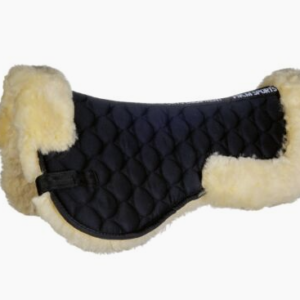
Genuine sheepskin
Soft, it lets the skin breathe and absorbs sweat. A good choice for sensitive backs and long sessions. Wash it cold with a suitable product.
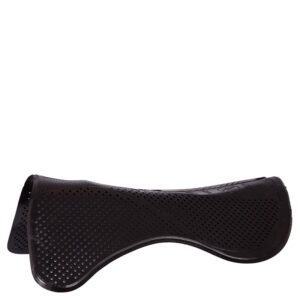
Gel
It absorbs impact well and doesn’t flatten. It is less breathable: on a horse that sweats a lot, pair it with a thick, absorbent saddle pad. Clean it with a sponge.
Memory foam
It moulds to the shape of the back under the rider's weight, then returns to its shape. It spreads pressure well.
Felt
Firm and breathable, felt stabilises the saddle. Models with a spine channel keep pressure off the spine.
Neoprene
Thin and non-slip, its main job is to stop the saddle slipping.
Riser pads
Some half pads have shims at the front or back (BR soft gel with riser). They compensate for slight saddle imbalance, for example in a horse that is gaining or losing muscle. It is a temporary solution: if the imbalance persists, have the saddle adjusted.
Which size?
The half pad should extend slightly beyond the saddle all round, without touching the withers. It must not crease under the panels. "Pony" models are available for small saddles.
How do you know if it fits?
After the session, look at the sweat marks under the saddle pad. An even mark is a good sign. Dry patches among wet areas may indicate a pressure point.