
Blog › Advice › Feet and wet weather
Guide · Hoof care
Your horse's feet in wet weather: preventing problems
Mud, waterlogged fields, damp stables: autumn and winter are hard on hooves. Simple everyday habits, and when to call the farrier or the vet.

What wet weather does
Waterlogged horn softens. Nails hold less well, shoes are lost more often, and the frog, deprived of air, can deteriorate. Repeated changes from dry to wet also weaken the hoof wall.
Day to day
- Pick out all four feet every day, and before and after work, with a hoof pick with brush.
- Clean out the grooves on each side of the frog thoroughly.
- Brush the mud off the wall and the coronet.
- Let the foot dry before applying any treatment.
- Check the shoes and nails while you are at it.
A treatment applied to a muddy or wet foot traps moisture instead of protecting it.
Protecting the foot
Under the foot
A Stockholm tar is brushed onto the sole and the frog. According to its product sheet, it protects them.
On the hoof wall
Black hoof ointment and bay laurel oil are applied to the wall and the coronet. According to their product sheets, they protect the horn from drying out and from wet.
Barefoot or lost shoe
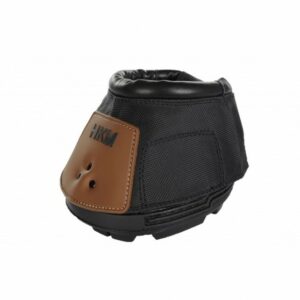
A hoof boot protects the hoof until the farrier comes.
Follow the instructions for each product, and ask your farrier what suits your horse's feet.
In the stable and the field
Clean, dry bedding matters as much as hoof care: remove droppings and wet straw every day. In the field, try to avoid the horse standing in mud all the time, for example around the hay rack or the water trough. A pair of bell boots also reduces shoes being pulled off in heavy ground.
When to call the farrier or the vet
A black, soft or smelly frog : show it to your farrier.
A hot foot, a strong pulse at the pastern or sudden lameness : call your vet.
A loose shoe or nails sticking out : let your farrier know before riding.